Be yourself; Everyone else is already taken.
— Oscar Wilde.
This is the first post on my new blog. I’m just getting this new blog going, so stay tuned for more. Subscribe below to get notified when I post new updates.
Be yourself; Everyone else is already taken.
— Oscar Wilde.
This is the first post on my new blog. I’m just getting this new blog going, so stay tuned for more. Subscribe below to get notified when I post new updates.
The concept of my podcast is taken from the week 10 material – what benefits and limitations are involved in using digital media to facilitate student learning and engagement? When I first saw this topic, I was very excited because it’s something I constantly wonder, and it is a constant discussion within my household as we have lots of little ones running around. The argument that I wanted to convey is: when is too young to introduce digital media to children and the pros and cons of it in terms of their development.
In my podcast I used two sources and two sources for a reason. I didn’t want to overwhelm the topic of discussion with the many views that are out there and avenues you can take this, I just wanted to touch on two different opinions of pros and cons which is the concept I envisioned at the start of the whole process. One of my sources talked about the pros of digital media and the other touched on the cons. The reason why I chose these two sources specifically is because I agreed with everything they said.
I started off with picking my topic. I then began to channel my own thoughts on the matter and evaluate the different avenues I could take it. I chose one to look into further and then conducted research to support my content. It was then time to put it all together a write a script. Once that was completed, I began to practise and revise my script and finally recorded myself and got a good outcome. I used audacity to put my podcast together which was super easy to use. For my musical intro and outro, I sourced a free sound on Bensound called Summer which I have attributed in the description of my podcast. I then uploaded it onto Soundcloud.
For as long as I have known I have been a fast talker – especially when I am nervous. Whenever I had to give a presentation for school, sporting commitments, uni, I would always ask people close to me how I went, and I always got the same response no matter how much I have been told it before. I talk way too fast. When I first tried to record myself for this assessment, I was shocked that I spoke way too fast yet again. I was shocked because I wasn’t even in front of people. So, this was something that I struggled with for the assessment. But take after take, I finally got it to a pace that I was happy with so it would be easily understood. I’ve never had to record myself for any other assessment before in University, but I liked it as it was something different and it tested me. From this experience, I learnt by doing. I had never used Audacity and Sound Cloud before this assignment, and it was amazing what I was able to achieve by creating this podcast that I will take into my future years of University and my career.
References:
Lieberman, D, Bates, C, & So, J 2009, ‘Young Children’s Learning With Digital Media’, Computers in the Schools, vol. 26, no. 4, doi:10.1080/07380560903360194
Himmelsbach, V, 2019, Technology in the Classroom in 2019: 6 Pros & Cons, Education Technology, retrieved 27 May 2020, < https://tophat.com/blog/6-pros-cons-technology-classroom/>.
“Music: www.bensound.com“
By Amanda Ioannou, 24 March 2020.
In 2010, co-founders, Kevin Systrom and Mike Krieger introduced the world to the photo sharing ap – Instagram. The ap was introduced to give people the ability to, at the click of a button, snap photos and videos and send them to their friends, family and people all around the world. People had the ability to follow one another, send each other photos and build relationships between different continents. As Instagram fastly became known and the whole world was now talking about it, it transformed people’s lives and attracted tens of millions of users. After much success, in 2012, Systrom and Kriegar sold their company to multi-million-dollar company Facebook, for $1 billion dollars. Since then, Instagram has evolved tenfold. People now use Instagram for more commercial purposes to promote their businesses – companies are now ‘collaborating’ with high influential people to create brand awareness and drive sales.
As effective as Instagram is in allowing society the opportunity to grow and evolve using new and exciting forms of technology, over the years, users find online environments potent sites for constructing and trying out versions of self (Smith, S and Watson, J 2014). People have used and abused the system by showcasing a false online persona to enhance their following and essentially give society what they want to see. These days, Instagram is used by so many influential people or as you may have heard them being called before; ‘influencers’. Influences are men and or woman who are usually famous, models or individuals who have built up a large following from going on a reality television show, becoming Tik Tok famous or have used Instagram to enhance their business. Common trends seen across influences are: taking lots of pride in their appearance, are always posting and engaging with their followers about their day-to-day lives, what they eat, what they wear and are generally seen promoting the free items they have received from companies all around the world.
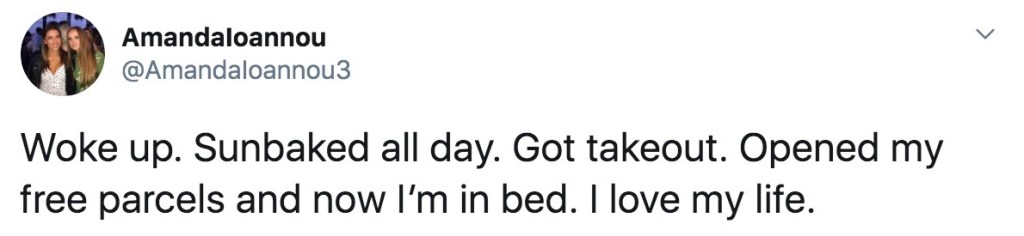
The problem with this is, more often than not, their life is very fabricated – it looks very glorious to a third-party person. However, what people don’t tend to see (as they are not shown so I don’t blame them) is behind all the makeup, the clothes, the experiences, the free items, these influences are normal people just like you or me. They still have to go to the supermarket to buy their weekly groceries, they still lie on the couch and have lazy days, they still have acne, body image or family problems. This is where, through the way Instagram has evolved, it can be detrimental to the lives of others. Young men and woman especially who are growing up trying to find themselves, are being exposed everyday (if they are old enough to have Instagram) to these fabricated lifestyles and are aspiring to be just like them. They are being brainwashed to have perfectly symmetrical faces and to have what is known as the ‘perfect figure’. But what even is the perfect figure? There is none. All figures in all shapes and forms are beautiful as that is how we have been genetically created. What most don’t see is these ‘perfect figure’s’ are generally photoshopped to fit the needs of society which is sending the wrong message. Individuals through this, are constantly telling themselves they are not good enough and are being so harsh on themselves.
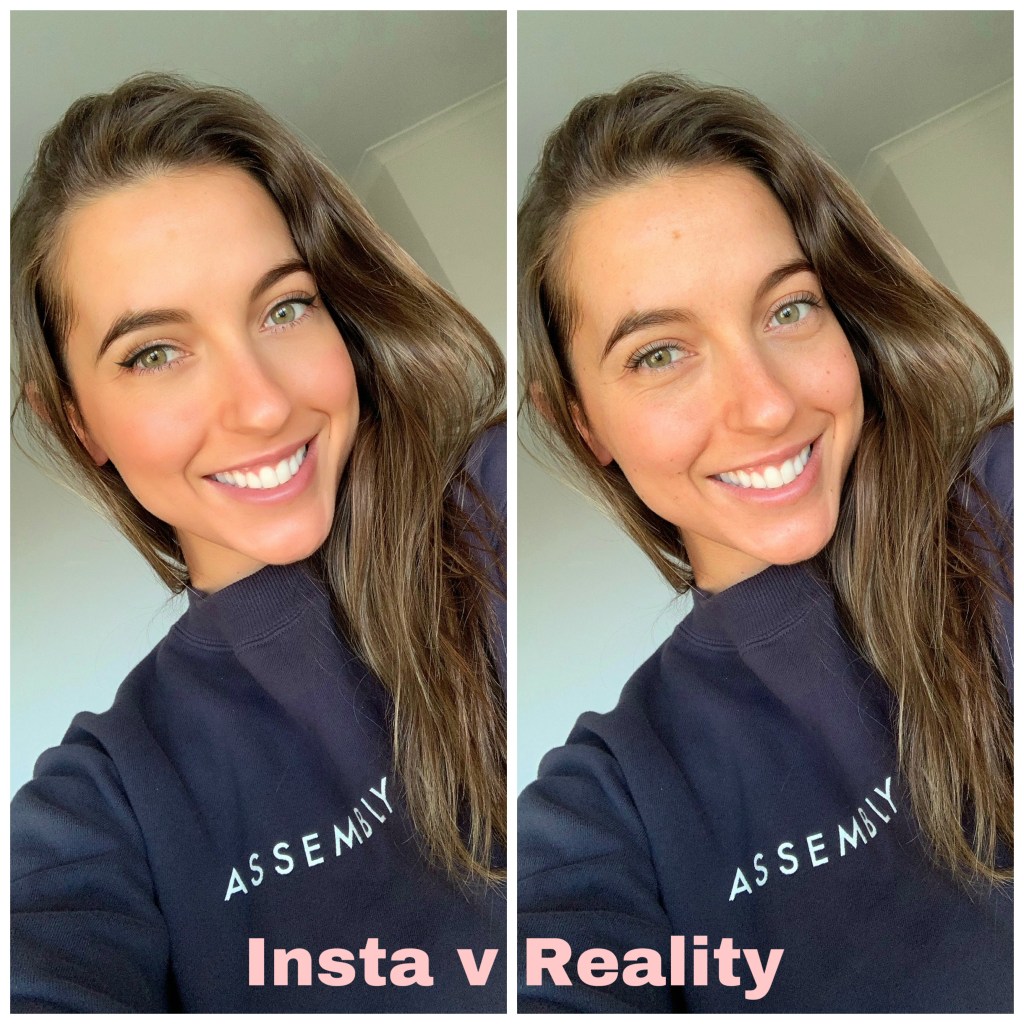
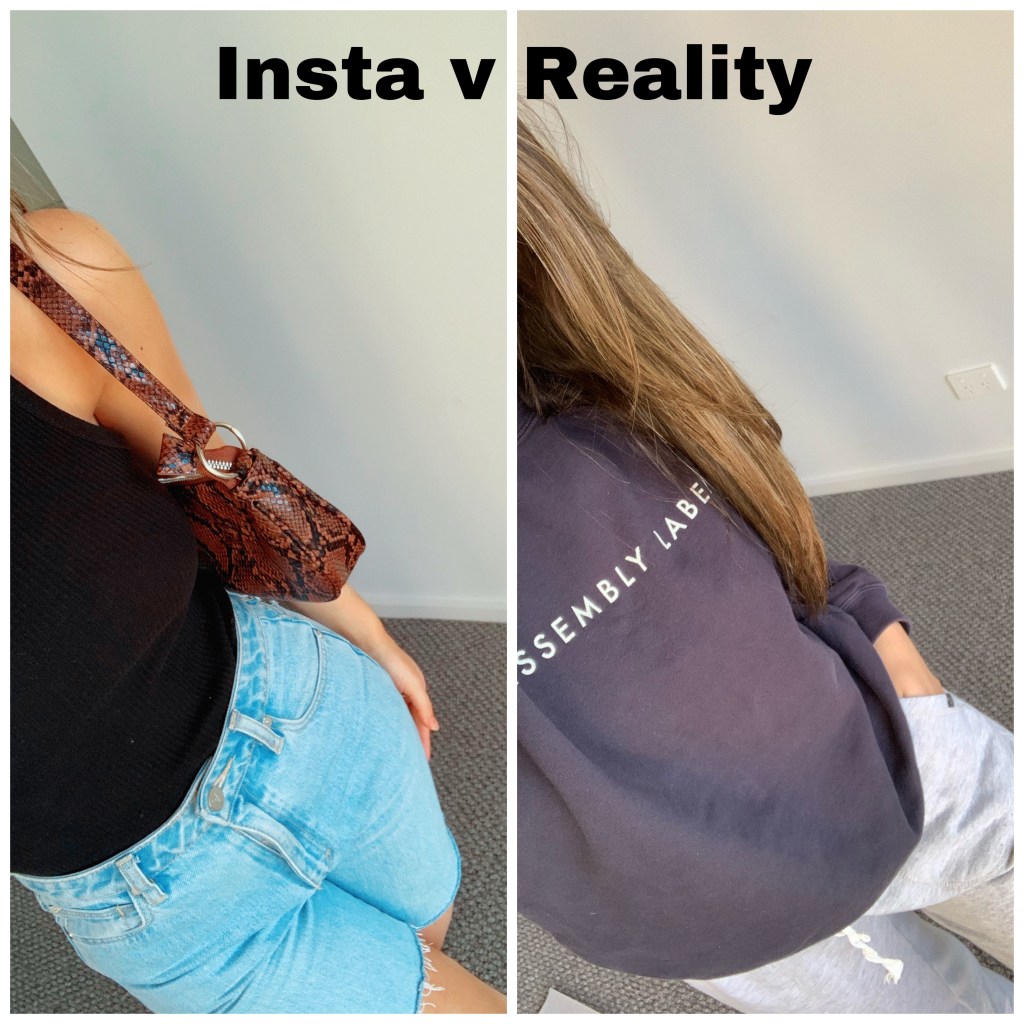
However, we are starting to see a slow trend of ‘influences’ taking a step back and breaking through this so-called persona in which they believe they have to uphold to fit in. They are showing society who they really are and are taking a stand, apologising to their followers for falling victim to it and sending them the wrong messages. Last year, we saw 2018 Australian Bachelorette Ali Oetjen, after posting a heavily photoshopped picture of herself on Instagram, receive a series of harsh comments on it. The reality television star a couple days later, posted a very emotional picture of herself crying, apologising to her followers for sending the wrong message – “At the time I thought, this photo of my face is not “pretty enough” I have an image to uphold & must make it look flawless! Crap! It made me feel sh*t!! I don’t want to conform, I want to continue to inspire real woman to love themselves for the bloody breathtaking beings that we are.” Through this, Oejten has said goodbye to the fabricated persona in which she felt she needed to deliver on social media platforms and now only offers the world her true unedited self.
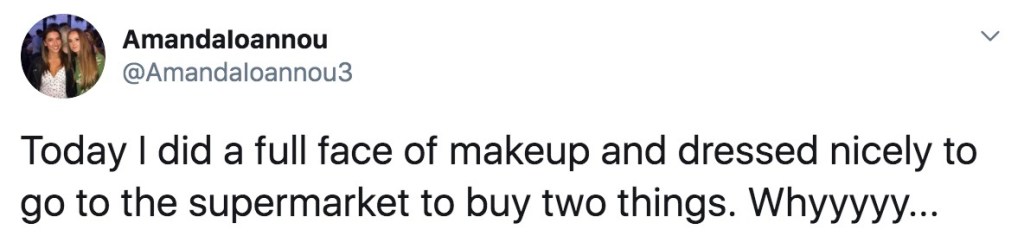
Today, the trend of fictitious online personas is slowly but surely starting to decline in the world of Instagram. With more and more influences taking a stand, they are showing the world that being yourself is more glorious than any lifestyle that they live.
References
Smith, S and Watson, J 2014, ‘Virtually Me: A Toolbox about Online Self-Presentation’, in Poletti, A and Rak, J (eds.), Identity Technologies: Constructing the Self Online, The University of Wisconsin press, Madison, pp. 75.
Mullen, J 2018, Instagram’s founders are leaving the company, CNN Business, date retrieved 24 April 2020, <https://money.cnn.com/2018/09/24/technology/founders-of-instagram-resign/index.html>.
Nerada, P 2018, Everything We Know About Ali Oetjen, Australia’s Next Bachelorette, marie claire, date retrieved 24 April 2020, <https://www.marieclaire.com.au/ali-oetjen-bachelorette-australia-facts>.
With the topic: a balanced perspective is the key to understanding the contemporary surveillance society in which we live, I decided to focus primarily on the controversy of surveillance footage in school classrooms to help further children’s development. The particular message I wanted to send is that no matter what, we cannot control the world in which we live. We are constantly being filmed, recorded and tracked not only for safety measures but also to gain data. By interviewing a mum, I wanted to have a discussion and gain real life feedback about whether or not she thinks surveillance should be implemented in classrooms. It was great to gain her perspective which really helped tie into the topic that we do live in a society of technology and that we need to have a balanced perspective in order to keep moving forward.
When deciding how I was going to create my video, I really wanted to be informational but creative at the same time. With the research that I gathered about school surveillance, I came to a conclusion that like most things, there are advantages and disadvantages towards the matter. Certain articles discussed how it can be a breach of privacy for both teachers and students while others discussed the importance of student’s learning and social development.
With this information I thought the best outcome to deliver my desired messaged was through an interview with a real-life mum. I made sure that when it came time to film my video that my main subjects were always in the centre of the screen as they were the main priority and focal point which allows my viewers to be able to really engage with the content. Engaging with the audience was always on the forefront of my mind before I began filming therefore, I decided in the planning stages, to start my video off with myself giving a brief introduction of the topic to really engage with the audience and get them intrigued.
When it came to recording my video and having lots of my ideas to film outside, I was conscious that when filming a lot of background noise can be detected and can result in a poor quality audio.
Therefore, when it was time to edit, I decided to use my outside shots still but mute them in my video and use audio or music above them to create another element to my video. By doing this, I also added the use of overlay to my video which could also be seen at the start where I introduce the title over the video of the people walking across the busy intersection.
Overall, my experience with this assignment was positive and I had lots of fun creating it while also addressing a real-life topic that is present today. I did, however, encounter some challenges along the way that I had to overcome. The first one being, when in an interview with someone and you don’t have a script, it can always run a little longer because people can really get emotionally invested. This happened to me while I was interviewing Penny with the whole duration going for eighteen minutes. This was a struggle for me as I had to cut more than half out. However, I overcame this by focussing on the point made that really addressed the topic.
The second problem that I encountered was that due to me having to cut so much content out, my video now is very staggered and jumps around a bit which is quite noticeable to the viewer. This is not ideal, but I have tried to make it as succinct as possible in my editing and I hope that the content and the setting is enough to keep the viewer engaged.
And finally, the last problem I encountered which was probably the biggest one, was that I originally had a school teacher to interview about the issues at hand but she cancelled the morning of filming because an important matter came up. This was obviously very hard at the time, but I brainstormed and decided what better way to talk to a mum who would have a strong opinion on the matter which will give me a measurable response. It worked out well in the end and allowed me to produce a video that really outlines that a balanced perspective is the key to understanding the contemporary surveillance society in which we live in.
References:
Lyon, D., 2007. Surveillance Studies: An Overview. 1st Edition ed. Cambridge: Polity Press.
Hassrick, E. & Schneider, B., 2009. Parent Surveillance in Schools: A Question of Social Class. Amerian Journal of Education , CXV(2), pp. 195-225.
https://www.journals.uchicago.edu/doi/abs/10.1086/595665
Johnson, B., Sullivan, M. A. & Williams, D., 2009. A one-eyed look at classroom life: Using new technologies to enrich classroom-based research. Issues in Education Research , XIX(1), pp. 34-47.
Lyon, D., 2007. Surveillance Studies: An Overview. 1st Edition ed. Cambridge: Polity Press.
Lyon, D., 1994. The Rise of Surveillance Society. 1st Edition ed. Minneapolis: Polity Press.
Liang, J., 2015. International research and pedagogy. Journal of Education for Teaching , XLI(3), pp. 235-253.
https://www-tandfonline-com.ezproxy-b.deakin.edu.au/doi/full/10.1080/02607476.2015.1045314
Music: Pulsing Logo Accent 02 – IMovie
For me choosing a digital media context to focus on was the easiest part of the assignment. As we know, surveillance is a part of our everyday life even though we may not necessarily realise it or notice it. For me, it wasn’t necessarily noticeable until around five months ago when my boyfriend’s house got broken into. After figuring out what was taken and countless conversations with neighbours and the police, he was not able to find the person who had broken into his house. If he had had surveillance cameras present on the premises, he then would have had a greater chance of finding out who the person was. Since then, my perspective on surveillance has changed. Throughout my video, I wanted to convey the importance of surveillance footage and the security it can provide residents with, in the hope that it will educate them enough to go out and install them.
I decided through lots of planning, that I wanted to convey my message by creating a ‘sit on the edge of your seat’ storyline to draw my viewers in and thus, having them gain an emotional connection to the security that cameras provide. Through the use of a filter on my camera, I wanted to make it look like it was a real-life scene being shot by a surveillance camera. This allows my viewers to think that they are watching their cameras in their house after an incident.
Once I had filmed all my scenes, it was then time to edit my work and make it all come together. At the start of my video, I chose to transition between the three shots to create an eerie mood and set the scene. Throughout my video, I wanted to make transitioning between different angles and shots a priority to depict the functions that real-life surveillance offers. Once the video was put together, I then began to incorporate sound into the mix. This brought my video to life and helped contribute even further to the eerie context. I started with slow and dramatic sounds to draw my viewers in. From there, I started to increase volumes, overlayed sounds, cropped them and faded them in and out. I then decided through research found, that I would incorporate a title page at the beginning and end of my movie, drawing on my findings to help portray my intended message. This allows my viewers the chance to sit back and take in the information that I am providing them with.
When filming my video, I filmed all my scenes from the same angle all at once and then moved on to another. I did this to ensure that the positioning of my camera was the same in each scene so that it didn’t move out of place. However, the filter I used over my camera shows the current time when filming and therefore, jumps between time throughout the video. If I was to use this app again, I would be more conscious of the time on the camera and figure out a way to make sure it runs smoothly and that the camera angles are the same each time.
References:
Porikli, F. et al., 2013. Video Sirveillance: Past, Present, and Now Future. IEEE Signal Processing Magazine , 30(3), pp. 190-198.
When I first read what the assessment requirements were and realised that I had to create a video about myself, it made me apprehensive as it’s always hard talking aloud about the future and your ambitions. Let alone in front of a camera. However, at the same time I was excited to push the boundaries and figure out a way to share who I am and my current pathway in a creative manner. For a while I sat down and had a think about the message that I wanted to convey. I finally managed to come to a conclusion that I wanted to be as authentic as I could and show you something that I do on a day-to-day-basis that excites me and allows me to be within a creative space that sets me up for my future.
That message is that when capturing that perfect moment, everything else around me stops and that it when I am truly in my element and at peace. I tried to convey that within the video when I completely forgot that I was filming and had to start again essentially after getting my juice.
Having the ability to upload it to various different social media platforms allows me to track how my images blossom and thrive just how I can see my knowledge and experience do the same with each and every opportunity I endure throughout my future.
When planning my video, I tried to think of the perfect setting that I could convey this certain meaning and decided what better way to do it than in a café. This allowed me to really capture the authenticity of my everyday lifestyle and really showcases who I am.
Once I had a clear idea in mind and had a script ready it was time to record and put all my planning into practice. I made sure I was in a well-lit area where it was easy to see my face, my surroundings and the scene itself. I did it indoors where there was no noise around me to enhance the quality of sound. I believe my diction is very clear throughout the video and doesn’t pick up any background noise. During my video, I also made sure that I kept good eye contact with the camera and all times that I was speaking to make sure that my viewers feel engaged throughout my video.
Setting the scene was my most enjoyable moment. Creating a café scene in the comfort of my living room really tested my creativity and allowed it to flourish. The main items I added to the composition to really help convey my message was the digital camera and the diary and pen. By having the camera present, I wanted to convey that I am never without a camera and am always able to capture a moment whether that be for work or leisure purposes. By incorporating the diary and pen to the composition, I was aiming to express that I always have the opportunity to write down characteristics of my chosen target publics if I am currently undertaking a marketing research.
Lastly, the main lesson I learnt is to not overcomplicate things as it is quite easy to convey a message as long as you are authentic. I initially went to a real-life café to film my video and soon realised the sound quality was not good at all. I then thought outside the box and made up my own scene showing me that my creativity can express a certain message just as well as a real-life setting.
This is an example post, originally published as part of Blogging University. Enroll in one of our ten programs, and start your blog right.
You’re going to publish a post today. Don’t worry about how your blog looks. Don’t worry if you haven’t given it a name yet, or you’re feeling overwhelmed. Just click the “New Post” button, and tell us why you’re here.
Why do this?
The post can be short or long, a personal intro to your life or a bloggy mission statement, a manifesto for the future or a simple outline of your the types of things you hope to publish.
To help you get started, here are a few questions:
You’re not locked into any of this; one of the wonderful things about blogs is how they constantly evolve as we learn, grow, and interact with one another — but it’s good to know where and why you started, and articulating your goals may just give you a few other post ideas.
Can’t think how to get started? Just write the first thing that pops into your head. Anne Lamott, author of a book on writing we love, says that you need to give yourself permission to write a “crappy first draft”. Anne makes a great point — just start writing, and worry about editing it later.
When you’re ready to publish, give your post three to five tags that describe your blog’s focus — writing, photography, fiction, parenting, food, cars, movies, sports, whatever. These tags will help others who care about your topics find you in the Reader. Make sure one of the tags is “zerotohero,” so other new bloggers can find you, too.

 A day in the life of Amanda